Una conversación con Chris Offutt
Por Demián Naón
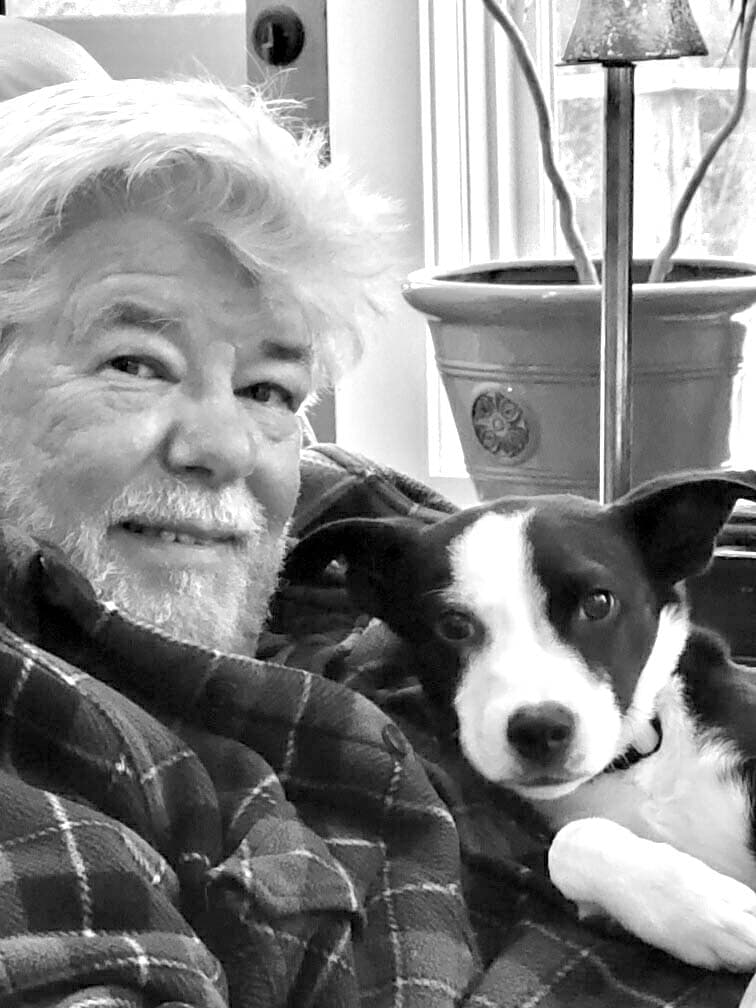
Chris Offutt es un escritor estadounidense nacido el 24 de agosto de 1958 en Lexington. Creció en una población minera y, tras obtener su licenciatura en la Universidad de Morehead, emprendió un viaje por Estados Unidos durante el cual realizó más de cincuenta trabajos distintos. Offutt, guiado por su pasión por escribir, se apuntó al curso de Escritura Creativa de la Universidad de Iowa. Sus primeros pasos en el panorama literario los dio con Kentucky seco, un libro de relatos que vio la luz en 1992. Aunque es principalmente conocido por sus cuentos y novelas, Offutt también ha publicado memorias y artículos de no-ficción.
Reside en Lafayette, donde trabaja como guionista de series, compaginando tal labor con la escritura.
¿Creciste en una casa rodeada de libros?
Mi abuela tenía libros publicados entre 1880 y 1920, en su mayoría ficción europea. Mi padre tenía su propia biblioteca de ciencia ficción, psicología e historia. Leí todo lo que había en casa. Cuando tenía diez años, el pueblo más cercano abrió una biblioteca chica. Permitían sacar cuatro libros por carnet por semana, y para mí eso era poco. Conseguí carnets para todos mis hermanos —dos todavía no sabían leer— y hasta uno a nombre de mi perro. Así podía llevarme veinte libros por semana.
¿Recordás lo primero que leíste?
Tal vez Billy Whiskers: The Autobiography of a Goat. Después pasé rápido a Nancy Drew, Los Hardy Boys y Sherlock Holmes. Más tarde, Mark Twain, Alexandre Dumas y Sir Walter Scott. Mi libro favorito de la infancia fue Harriet the Spy, de Louise Fitzhugh. A los doce años amaba el béisbol y leí El guardián entre el centeno creyendo que era una novela sobre béisbol. Me marcó de verdad. Nunca más volví a leer literatura juvenil.
¿Cómo era tu relación con la escritura de chico? ¿Hay alguna escena que explique cómo empezó todo?
Escribí mi primer cuento a los siete años. Se llamaba “Kenny Clark”, una inversión del nombre “Clark Kent”, la identidad humana de Superman. Estaba muy influido por las historietas, incluso con onomatopeyas de peleas.
En algún momento quisiste entrar al ejército. ¿Qué buscabas ahí?
Sobre todo, irme de mi casa. Alejarme de mi padre y del pueblito de doscientas personas en medio del bosque. Donde crecí, el ejército era la única vía de escape. No pasé el examen físico por una cuestión técnica. Fue un golpe fuerte: sentir que quedaba atrapado en las colinas. Quizá fue lo mejor, porque terminé estudiando teatro y arte en la universidad. A veces pienso cómo habría sido mi vida si me hubieran aceptado. Por eso escribo tanto sobre veteranos.
También imaginaste ser fotógrafo o pintor. ¿Por qué ganó la escritura?
De chico dibujaba todo el tiempo y hacía mis propios cómics. Después entendí que pintar era caro: materiales, espacio. La fotografía analógica también salía mucho, entre el rollo y el revelado. No podía costear ninguna de las dos. Escribir es el arte más barato. Es portátil, casi gratis. Siempre hay alguien que te presta papel y lapicera. Con una mesa y una silla alcanza. La decisión tuvo mucho que ver con la economía.
Hoy uso cámara digital y salgo a sacar fotos varias veces por semana. Me encanta la fotografía. En cierto modo preferiría ser fotógrafo. Pero no me resulta tan plena como la escritura.
¿Qué recordás del Iowa Writers’ Workshop, especialmente de James Salter?
Fue la primera vez que estuve rodeado de gente muy inteligente, y de personas que amaban la literatura tanto como yo. Fueron dos años increíbles, sobre todo después de una década de trabajos físicos. Salter fue un gran maestro. Me apoyó en la idea de que podía ser escritor. Le debo algo que no se paga: haber creído en mí.
¿Llevás un diario?
Sí, todos los días. Escribí hoy. Mis diarios cubren cincuenta años. Son bastante aburridos, llenos de quejas. Cuando los releo, veo poca evolución emocional. Siempre preocupado, siempre algo decepcionado. El clima es demasiado frío o demasiado caluroso. Las entradas dicen cosas como: “Dormí mal. No me siento bien. Tengo que ir a trabajar y no quiero. Desayuno y voy.”
En mis veinte escribía entradas larguísimas, veinte páginas, tres veces por día. Cuando empecé a escribir ficción en serio, el diario quedó en segundo plano. Me sirvió para aprender la naturaleza de las frases y la narración.
Creo que escribir no es la forma natural en que piensa el ser humano. La gramática, la puntuación, la claridad, no son naturales. Pensamos en imágenes, impulsos, ráfagas. Escribir unas líneas cada mañana vuelve a acostumbrar la mente a pensar en oraciones antes de empezar a trabajar.
Has hablado de ansiedad y depresión. ¿Cómo influyen en tu escritura?
Escribir me ayuda con la ansiedad. Baja la velocidad de la máquina mental. La depresión va y viene. A veces tiene que ver con circunstancias, a veces con recuerdos, a veces con algo profundo que no tiene nombre. Es una sensación pesada, como si la gravedad aumentara. Igual me obligo a comer, caminar y escribir. Un día hermoso puede sentirse opresivo. En crisis, estoy tranquilo. Cuando hay algo concreto contra lo que empujar —el clima extremo, un problema económico, una reparación en la casa— funciono mejor.
Observar la naturaleza me da placer: árboles, agua, flores, pájaros, mariposas, el cielo. Esas pequeñas cosas alivian la ansiedad.
Sé algo: si escribo a la mañana, me siento mejor todo el día. No importa si fue bueno o malo. Escribir me da propósito. Me hace sentir que pertenezco.
¿Tenés una rutina?
Intento mantenerla: me levanto, tomo agua, después café, miro arte visual un rato. Desayuno liviano. Camino una milla. Vuelvo y escribo en mi diario. Eso lleva unos noventa minutos. Después me siento a trabajar en la novela, tres o cuatro horas. Si estoy corrigiendo, más. Escribir material nuevo agota más; revisar permite sostener más tiempo. Nunca corrijo hasta tener un borrador completo. Intento seguir avanzando en la vida y en el arte.
¿Qué cambió después de Kentucky Straight y The Good Brother?
El primer libro cambió mi percepción de mí mismo como escritor y también cómo me trataban los demás. Después del segundo pude trabajar como escritor invitado en universidades, lo que ayudó a sostener a mi familia.
Todos mis libros reflejan algo de mi vida. Kentucky Straight es una versión ficcional de la gente que conocí en la infancia. La soledad en el bosque es un elemento constante, y lo fue en mi niñez. En The Good Brother trabajé como recolector de basura, como el protagonista. Me mudé a Montana, como él. Los diálogos de los hijos pequeños son frases textuales de mis propios hijos.
Dicen que sos el mejor escritor de novela negra vivo en Estados Unidos. ¿Cómo convivís con eso?
Nunca lo había escuchado. Suena bien, pero lo dudo. Hay muchos escritores buenos. Si existiera esa posibilidad, la manejo como las cosas buenas: la ignoro. Si lo creyera, me relajaría.
No me gusta la idea de “el mejor”. El arte no debería ser jerárquico. Eso genera competencia y la competencia compromete la obra. Cada escritor tiene que ser fiel a su percepción.
Hay favoritos, claro. Mis autores de novela negra preferidos son Richard Lange, William McIlvanney y Massimo Carlotto. Y del siglo XX en Norteamérica, Kent Haruf, James Alan McPherson y Willy Vlautin. Para entender la cultura de este país, hay que leerlos.
¿Qué escritores te influyeron?
Nunca busqué influencia. Leí sin parar. Me marcaron tanto los cómics y la Biblia como la ciencia ficción, el espionaje, Rulfo, Amado o Chéjov. Antes leía cuatro o cinco libros por semana; ahora uno o dos. Todos dejaron algo.
Cuando escribo un primer borrador, evito autores de estilo fuerte: McCarthy, Hemingway, Borges, Cortázar, O’Connor, Denis Johnson. Los admiro, pero no quiero imitarlos. No hay nada peor que una versión débil de un gran escritor. Prefiero un estilo directo, como Steinbeck o Haruf.
¿Qué le dirías a quien guarda sus textos por miedo?
Siempre se pueden cambiar nombres y lugares, usar seudónimo. Mirá a Elena Ferrante. Es una gran escritora.
¿Escribir es una forma de vivir?
Desde la infancia. Es mi manera de entender el mundo y mi lugar en él. Tengo 67 años, vivo solo con un perro, lejos de la poca familia que tuve. Escribir me da una razón para seguir. Sin eso, me invade la desesperanza. Es lo único constante, junto con viajar.
Escribo para ordenar el torbellino mental. La narrativa me permite trabajar mis propios problemas a través de personajes. También hace que el tiempo pase más rápido. Si no, queda la rutina: tareas, cuentas, comida, limpieza. Todo necesario, todo vacío. Escribir le da sentido al día.
¿Ves algo nuevo en las series actuales?
El cambio empezó hace años con Six Feet Under, Los Soprano, The Wire. El paso de lo episódico a lo serial fue una revolución. Hoy hay demasiadas opciones. Encontrar una buena puede agotar.
De chico casi no veía televisión. Dejé de verla en 1970. Décadas después me contrataron para escribir TV. Me resultó gracioso. Había cambiado todo: menos censura, sin publicidad. Ahora miro más, aunque me cuesta encontrar algo que me atrape. Prefiero los dramas británicos.
Un lugar en el mundo.
Estoy más cómodo solo en el bosque. Me gustan las playas de noche. Amo Córcega. Cataluña también. He vivido en muchos lugares y visto lo que quería ver en Norteamérica y Europa. Me gustaría conocer Argentina.
Un éxito y un fracaso.
Nunca perseguí el éxito literario. Mis fracasos artísticos no pesan. Hay muchos, claro. Los más dolorosos son personales y no los hablaría en público.
Mi mayor éxito es haber sido un buen padre. Hablo con mis hijos dos veces por semana. Que algunas fotos mías se exhiban en galerías me alienta. Seguir vivo y escribiendo ya es un logro. La salud también, para alguien que fue imprudente en su juventud.
Imaginá esto: al final de un túnel está Chris niño; al otro, el Chris de ahora. Se ven y hablan. ¿Qué se dicen?.
—¿Quién sos, viejo?
—Soy vos, de grande.
—No te creo.
—Te lo pruebo: estás enamorado en secreto de una chica llamada Annabelle. Le tirás notas por la ventana del colegio.
—¿Cómo sabés eso?
—Porque soy vos.
—¿Sos un fantasma?
—No. Creciste. Te fuiste de las colinas, como querías.
—Bueno, al menos eso lo hice.
—No fue fácil. La primera vez vas a tener que irte caminando.
—Sigo sin creerlo. Tengo mucha imaginación.
—Ya lo sé. La vas a usar.
—No quiero tener trabajo.
—También lo sé. ¿Puedo darte un consejo?
—Nadie me da consejos. Aprendo de los libros.
—Y del bosque. Ahí aprendés más de lo que pensás.
—¿Cuál es el consejo?
—Elegí bien tus hábitos, porque de grande te van a dominar. Y elegí mejor a las mujeres.
—No entiendo.
—Ya vas a entender.
A conversation with Chris Offutt
Por Demian Naón
Were you raised in a home with books around you?
My grandmother had books from the 1880s to 1920s, mostly European fiction. My father had a personal library of science fiction, psychology, and history. I read all the books in the house. When I was ten, the nearest town opened a small library. It had a limit of four books per library card for a week, which wasn’t enough books for me. I got cards for all my siblings, two of whom were too young to read, and a library card in my dog’s name. That way I could check out 20 books per week.
Do you remember the first thing you ever read?
Maybe Billy Whiskers: The Autobiography of a Goat. I quickly graduated to Nancy Drew and The Hardy Boys and Sherlock Holmes. Then Mark Twain and Alexandre Dumas, and Sir Walter Scott. My favorite book from childhood was Harriet the Spy by Louise Fitzhugh. At age 12, I loved baseball and read Catcher in the Rye, thinking it was a baseball book. It had a profound effect on me. I never read another juvenile novel again.
What was your childhood relationship with writing like? Is there a moment or small story that captures how writing entered your life so early on?
I wrote my first story at age seven. “Kenny Clark,” which was an inversion of Superman’s human identity of “Clark Kent.” The story is highly influenced by comic books, including sound effects from a fight.
At one point, you wanted to join the army, which seems far from a writer’s life. What were you looking for back then?
Mainly, I wanted to get away from my father. I also wanted to leave my small village of 200 people in the woods. Military service was the only option for escape where I grew up. Unfortunately, I failed the physical examination on a technicality. It was a crushing blow at the time—to be stuck in the hills. Perhaps it was for the best because I wound up going to college to study theater and art. I often think about how my life would have been different if I’d been accepted into the army. That’s one of the reasons I write about military veterans.
I know you once imagined becoming a photographer or a painter, or doing something connected to the arts. Why did writing end up being your path?
As a kid I wanted to draw and write comic book. I drew all the time and made my own comics. Later I learned that painting costs a lot of money for supplies. Plus you need a space to work. Pre-digital photography was also very expensive for the film and the processing. I really couldn’t afford either painting or photography. Writing is the cheapest art form. It’s portable and free. People will give you paper and pen. You need very little space to write–a table and chair. The choice to write was largely influenced by economics.
Nowadays I use a digital camera and go out and take photographs a few times a week. In a way, I’d rather “be” a photographer. I love photography but it’s not as personally fulfilling as writing.
What do you remember most about your time at the Iowa Writers’ Workshop, especially studying with James Salter?
It was the first time I’d been around really smart people. And people who cared about literature as much as I did. It was an incredible gift of two years, especially after working labor jobs for a decade. Salter was a great teacher, at least for me. He was very supportive of the idea that I could become a writer. I owe him a debt I can never adequately repay. The debt of belief.
Do you keep a personal journal?
Yes, every day. I wrote in it today. My journals go back fifty years. They are mostly boring, consisting of complaints. When I look back at them, there seems to be little progression. No emotional advancement. I’m always worried about something and disappointed. The weather is either too hot or too cold. Every entry is a variation of: “Didn’t sleep well. Don’t feel good. Have to go to work but don’t want to. Guess I’ll eat breakfast and go.” Nowadays, they are very similar.
In my twenties, my journal entries were very long and much more detailed. Sometimes 20 pages long, three entries per day. But when I began writing in a serious way, my journals got less attention. It was a way to learn the nature of sentences and narration as a young man.
I believe that writing is not the natural way a human thinks. Grammar, punctuation, capitalization, language that is coherent and clear—none of that is natural. We think in images and little quick bursts, impulses, and sometimes words. Writing a short morning journal entry is a way to re-accustom my mind to thinking in sentences before I write.
I want to ask you something personal. I’ve read that you’ve dealt with anxiety and depression. How has that shaped, or interfered with, your work as a writer?
Writing is a way to deal with anxiety. Writing quells the rapid machine of my mind. Depression comes and goes, sometimes situational, sometimes memory from the past, sometimes something deep inside and unnamable. Just a hard sensation as if gravity is much greater, and everything feels impossible to do. But I force myself to eat, walk, and write. A gorgeous day can feel impossibly oppressive. I do well when I have something to push against, such as the sub-zero weather in winter or 105F temperatures in summer. I feel good when I have an external pressure that must be confronted—weather, economics, a problem with the house, or the logistics of travel. In crisis, I am calm.
My greatest source of pleasure is observing the natural world–trees, water, flowers, birds, butterflies, wild grasses, and of course, the sky. Taking notice of these little joys in life help with anxiety.
One thing I know–when I write in the morning, I feel better about myself all day for having written. It doesn’t matter if what I wrote was “good” or “bad.” Just that I wrote. Writing makes me feel worthwhile, as if I belong in the world. Writing provides me with purpose. I’ve been lucky to have it in my life.
When you write, do you follow a routine? How do you prepare yourself, in body and in spirit? Is there any small ritual you return to?
I try to follow a standard routine: get up, drink water, then coffee, look at visual art for a while. Eat a light breakfast. Take a mile walk. Back home, write in my journal. All this takes about 90 minutes. Then I sit down to work on my novel. I usually work 3-4 hours, longer if I’m revising. Writing new material is more draining but I can revise for much longer. I never revise until I have a completed draft. Mainly, I try to keep moving forward, in life and art.
What changed for you after publishing Kentucky Straight, and later The Good Brother? Looking back, which parts of your work feel closest to your own life?
Kentucky Straight was my first book so what changed was my sense of self as a writer. Also, it affected how people treated me. After The Good Brother I was able to get a few positions as a Visiting Writer at universities, which helped support my family. All my books reflect my life. Kentucky Straight was a fictional version of the people I knew during childhood. Being alone in the woods is a constant element in all my books and was in my childhood as well. The Good Brother is a different reflection. I worked as a garbage man like Virgil, the protagonist. I moved to Montana as a young man like he did. Every line of dialogue uttered by Botree’s young children were things my own sons said, verbatim.
I need to ask you this, even if labels are uncomfortable. People often say you’re the best living crime writer in the United States. How do you live with that idea?
I never heard that before. It sure sounds good but I doubt if it’s true. There are a lot of good writers. I suppose I live with the possibility of it being true the way I do most good things–I ignore it. If I believed it, I might get lazy. I just try hard with each book and hope for the best.
I don’t really agree with the premise—the idea of “the best” of anything. Making art shouldn’t be hierarchical because that implies competition, and writers who feel that they are in competition with other writers will always compromise their art. All any writer can do is try to be true to their perceptions.
If there’s a “best” writer, then there’s a “worst” writer, and who decides that? There are favorites, of course. We all have favorites, whether it’s crime writers or actors or music bands. My favorite crime writers are Richard Lange, William McIllvanney, and Massimo Carlotto. My favorite North American writer of the post-war 20th century is Kent Haruf. Next is James Alan McPherson and Willy Vlautin. To understand the culture of this country, read their work.
Which writers did you hope would influence you, and which ones do you now recognize actually did?
It never occurred to me to hope a writer would influence me. I just read constantly. I’ve been influenced by the reading of my youth–comic books and the Bible–as much as science fiction, espionage, and such writers as Juan Rulfo or Jorge Amado or Anton Chekhov. I used to read 4 or 5 books a week. Then 3 books a week. Now one or two a week. They’ve all influenced me.
I’ve also tried to avoid the influence of certain writers when I’m writing a first draft–those with a powerful and distinctive style. Cormac McCarthy for instance. Hemingway. Borges. Cortazar. Flannery O’Connor. Denis Johnson. These are terrific writers. I can stand back and admire them but must resist copying them. There is nothing worse than writing a weak version of a great writer.
When I write new material, a first draft, I’m very careful about what I read. I only read books written in a way that I want to influence the new work. I prefer a straightforward style like Steinbeck or Haruf. After the first draft, during revisions, I read all the books I’ve set aside. The ones with a strong style that I don’t want to accidentally mimic.
What would you say to people who keep their writing hidden, out of shyness or fear?
You can always change all the names and locations and use a pseudonym. Look at Eliana Ferrante and her books starting with My Brilliant Friend. She’s a genius. A great writer.
Is writing a way of living for you? Why do you write?
I’d say that writing has been a way of life since childhood. It’s a way to try and make sense of the world and my place in it. Why am I here? How did my life get this way? I’m 67 years old and living alone with a dog, no community, and far from what little family I ever had. Writing gives me a reason to live. Without writing, I despair. It’s been the only consistent part of my life. Writing and travel.
Why do I write? Mainly to fight the constant whirling activity of my mind. Narrative allows me to put my thoughts into words and use imaginary characters to work through my own problems. I write to make sense of the sweet absurdity of existence. Writing also makes the time pass fast, which I appreciate. Otherwise I’m facing the sheer tedium of life with no respite–errands, chores, tasks, getting food, preparing it, cleaning up after meals, putting gas in the car, paying bills, doing laundry, tidying the house, trimming trees, mowing the grass. All of the necessary tasks that feel so meaningless. Writing provides a context for living, a reason to continue.
Do you feel that something genuinely new is happening, literarily speaking, in the scripts of streaming series?
I think that began several years ago with a few TV shows. Six Feet Under. The Sopranos. The Wire. The shift from episodic TV to serialized TV was a kind of revolution. Now there are more TV shows to choose from than ever. And more streaming platforms. The effort to find a good one can be exhausting!
When I was a child our house had very poor television reception. I quit watching it altogether in 1970. Thirty-five years later I was hired to write TV, which was very funny to me. I had to start watching TV! A lot had changed. The actors could curse and take their clothes off. And there were no commercials. I watch more TV now but it is difficult to find a show that really engages me. My favorites are British dramas.
A place in the world?
I am most comfortable in the woods alone. I like beaches at night. I love the island of Corsica, France. Catalonia, the region in northern Spain, is also a favorite place. I’ve been lucky enough to live in many places and see what I wanted to see in North America and Europe. I’d like to visit Argentina.
One success and one failure?
I never really chased literary success so none of my artistic failures matter. There are many, of course. Hundreds. It is important to experiment but most experiments fail. The key is to learn from them. The most painful failures are in my personal life and are too difficult to discuss in public.
My biggest success is being a good father to my sons. I talk to each of twice a week on the phone and visit when I can. Lately I’ve had a few photographs accepted for exhibition in galleries, which is encouraging. I suppose still being alive and writing is a success. And I’m fortunate that people like my work. Success was never a goal for me. I just wanted to get through the day and feel okay. I’m very healthy, which I suppose is a kind of success for a man who was reckless in his youth.
Imagine this: at one end of a tunnel stands Chris as a child; at the other, Chris as he is now. They can’t touch, but they can see each other and speak. What do you think they would say?
Little Chris: “Who are you, old man?”
Big Chris: “I’m you, grown up.”
Little Chris: “I don’t believe you.”
Big Chris: “I can prove it. You have a secret crush on a girl named Annabelle. You throw notes to her from the school window.”
Little Chris: “How do you know that?”
Big Chris: “Because I’m you.”
Little Chris: “Are you a ghost?”
Big Chris: “No, I’m alive. I’m you. You grew up and got out of the hills. Like you always wanted.”
Little Chris: “Well, at least I did that.”
Big Chris: “Yes, it’s not easy to leave. You’ll have to walk the first time.”
Little Chris: “I still don’t think this is real. I have a big imagination, you know.”
Big Chris: “Yes, I know. You will use that imagination in your work.”
Little Chris: “I don’t want a job.”
Big Chris: “I know that, too. Do you mind if I give you some advice?”
Little Chris: “Nobody ever gave me advice. I don’t have a big brother or uncles. I learn from books.”
Big Chris: “And being in the woods. You learn more there than you realize.”
Little Chris: “What’s the advice?”
Big Chris: “Pick your habits carefully because you’ll be a slave to them when you get older. But pick your women more carefully.”
Little Chris: “I don’t understand.”
Big Chris: “You will.”