
Una conversación con Charles Baxter
Por Demián Naón
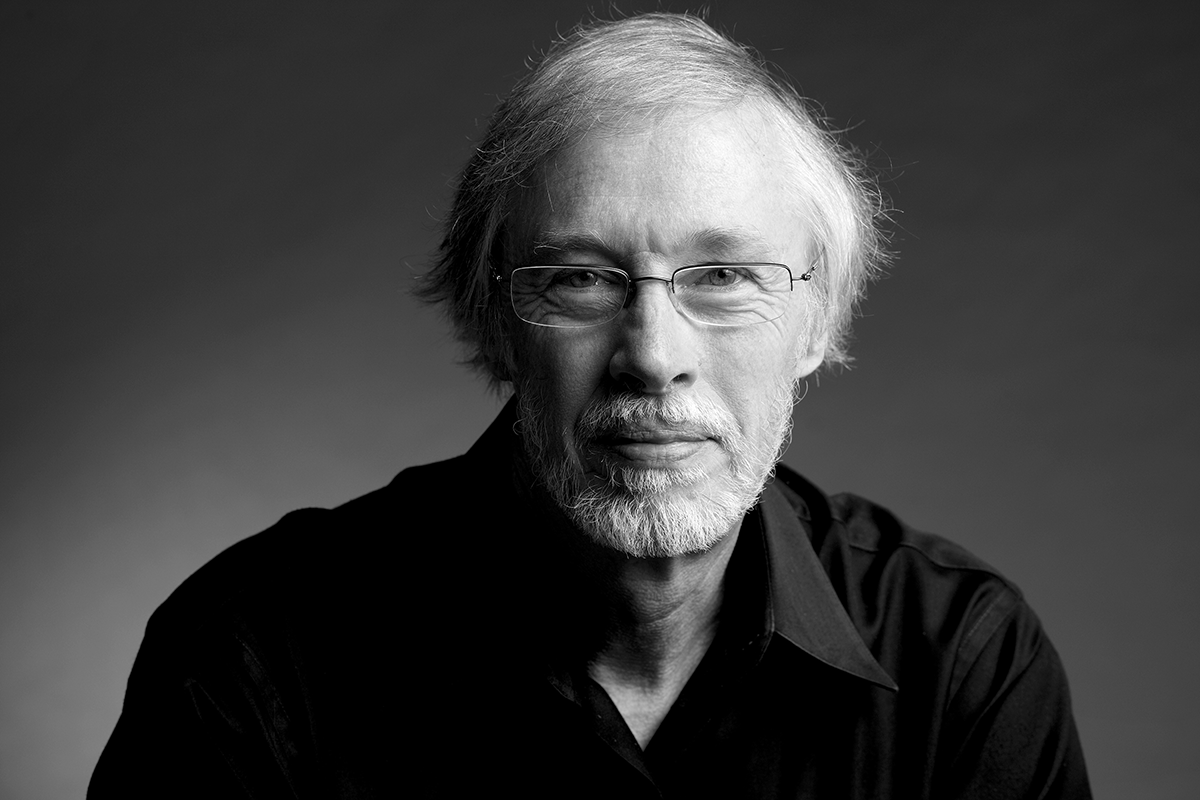
Charles Baxter nació en Minneapolis en 1947. Se graduó en Macalester College en 1969 y obtuvo un doctorado en la Universidad Estatal de Nueva York en Buffalo en 1974. Vivió durante muchos años en Ann Arbor, Michigan. Fue profesor Edelstein-Keller de Escritura Creativa en la Universidad de Minnesota y también enseñó en la Universidad Estatal de Wayne, la Universidad de Michigan, Stanford y la Universidad de Iowa. Actualmente reside en Minneapolis.
DN: ¿Creciste en un hogar rodeado de libros?
Si. Antes de leer por mi cuenta, crecí en una casa rodeada de libros. Mi padrastro estaba muy orgulloso de su biblioteca: una habitación entera con estantes llenos de antiguos libros encuadernados en cuero y colecciones completas de Marx, Freud, Nietzsche, Macaulay, los Clásicos de Harvard, Ortega y Gasset, entre otros. Era un hombre culto y muy lector.
No recuerdo que mi madre fuera una gran lectora, salvo por los libros de Anne Morrow Lindbergh, esposa de Charles Lindbergh. A ella le gustaba más la música que la literatura.
CB: ¿Recuerdas lo primero que leíste?
El primer libro con el que aprendí a leer fue un libro escolar, Tip and Mitten. Tip era un perro y Mitten, un gato, su amigo. Juntos vivían distintas aventuras.
¿Cómo influyó en tu literatura haber perdido a tu padre a tan temprana edad?
Dudo que me hubiera convertido en escritor si mi padre no hubiera muerto cuando yo tenía dieciocho meses. Su muerte dejó un vacío permanente: una ausencia profunda, una especie de hueco interior que intenté llenar con cuentos, poesía y novelas. Ese tipo de heridas suele despertar la vocación artística desde muy temprano. Con el tiempo, la herida suele cicatrizar, pero para entonces el arte ya se instaló como una práctica y terminó convirtiéndose en una forma de vida.
¿Cómo era tu relación con la escritura durante tu infancia? ¿Hay algún momento o anécdota que ilustre cómo la escritura entró en tu vida tan pronto?
Antes de aprender a leer por mi cuenta, vivíamos en medio de la nada, como se dice en inglés. Era un lugar muy aislado, con muy pocos vecinos y casi ningún chico cerca con quien jugar. Por eso, cuando no salía a recorrer el campo, pasaba el tiempo leyendo. Recuerdo con mucho cariño un libro de un autor llamado Thornton Burgess. Contaba historias de animales que hablaban; eran personajes entrañables, simpáticos y cuya compañía hacía sentir menos solo.
¿Qué efecto tuvieron en tu escritura las lecturas en un estado de tanta soledad?
Es difícil decirlo, pero sé que cuando los chicos y los jóvenes atraviesan momentos de soledad, muchas veces encuentran refugio en los libros, que parecen recibirlos sin importar quiénes sean. La literatura no busca atraparte de la misma manera que suelen hacerlo la televisión o el cine. Habla en voz baja, con intimidad, como un amigo o un ser querido que quiere compartir algo importante. En cambio, las películas suelen exigir toda tu atención y hablan a los gritos, como un amante que sabés que no va a quedarse mucho tiempo. Los libros, en cambio, parecen querer acompañarte para siempre.
¿Llevas un diario personal?
No.
¿Es posible que el realismo, después de la pandemia y la era Trump, esté agotado como forma literaria?
Sí. El realismo siempre desaparece y siempre vuelve. El teatro griego ya combinaba el realismo con la intervención de los dioses, que rompían las reglas de lo real. Borges decía que el realismo no era más que un episodio dentro de toda la historia de la narración. No puede haber realismo cuando no existe un acuerdo sobre qué es lo real o qué entendemos por realidad. En esos momentos tendemos a refugiarnos en la fantasía y el mito, en historias de gigantes y criaturas de otros mundos. Todos nos convertimos un poco en Don Quijote y mantenemos a Sancho Panza a cierta distancia. Donald Trump vive en un mundo de fantasías y alienta esas fantasías en los demás. Su obsesión por el dinero terminó convirtiéndolo en una persona fuera de la realidad.
¿La parte más difícil de ser escritor es haber aprendido a sobrevivir a las noches más oscuras?
Sí. La duda y la desesperación suelen acompañar a los escritores, por eso hace falta tener fe: la fe de que uno va a terminar un libro, la fe de que quizás sea publicado y la fe de que encuentre algunos lectores. Como todos sabemos, a veces es muy difícil sostener una fe, cualquier tipo de fe.
¿Qué tan importante es, en una narración, mantener el sentido del humor?
No lo sé. Hay escritores que nunca sonríen. Yo prefiero una escritura que tenga lugar para la risa, porque la vida también la tiene, sobre todo a medida que uno envejece. Además, como decía James Joyce, la alegría de la comedia suele estar libre del deseo y del resentimiento. Pero hay veces en que aquello que la literatura necesita contar es tan duro que el humor estaría fuera de lugar. Después de todo, no se le puede pedir a Solzhenitsyn que sea gracioso. Hemingway y Zola rara vez recurren al humor y, cuando lo hacen, suele resultar incómodo.
¿Cómo se detecta evidencia clara de talento en la escritura?
La buena escritura te lleva a un lugar en el que nunca estuviste y hace que quieras quedarte a vivir en el mundo que el escritor creó.
¿Qué escritores esperabas que te influyeran y cuáles reconoces ahora que realmente lo hicieron?
Entre los escritores en lengua inglesa, sentí la influencia de muchos, entre ellos Sherwood Anderson, William Maxwell y Katherine Anne Porter. De los rusos, especialmente Chéjov. Entre quienes escriben en español, Borges, Cortázar y Alejo Carpentier, aunque hay muchos otros que me influyeron desde distintas lenguas, en especial Natalia Ginzburg. También me marcaron dos escritores estadounidenses poco conocidos: Davis Grubb y J. R. Salamanca. Son demasiados como para nombrarlos a todos.
¿Qué les dirías a las personas que mantienen sus escritos ocultos por timidez o miedo?
La escritura está hecha para ser compartida. En el mejor de los casos, es un regalo para los demás. Hay que aprender a desprenderse de ella, a entregarla, del mismo modo en que uno debe dejar partir a un hijo cuando se convierte en adulto y sale al mundo.
¿Por qué escribes?
«Es mi vocación. Es para lo que fui puesto en este mundo.»
¿Escribir es para ti una forma de vida?
Cuando estoy inspirado, sí. Cuando mi mente y mi corazón están vacíos, hago otras cosas.
¿En cuál de los personajes de tus novelas, creo que son siete, te ves más reflejado en profundidad?
Todos ellos. Me veo reflejado en todos, tanto en los hombres como en las mujeres. En mi ficción estoy en todas partes y en ninguna al mismo tiempo.
¿Qué podrías decirnos sobre la publicación de tu primer libro y la recepción de tu primer premio? ¿Cómo cambia esto el oficio de escribir?
Todo el mundo necesita aliento.
Imagínate esto: en un extremo de un túnel está Charles de niño; en el otro, Charles ahora. No pueden tocarse, pero pueden verse y hablar. ¿Qué crees que se dirían?
Todo chico quiere saber: “¿Qué va a ser de mí?” A veces, cuando era chico, quería poder preguntarle a mi yo adulto si iba a estar bien, si iba a encontrar a alguien y algo para amar. Como adulto, le diría a ese chico que no tenga miedo. Le diría que el mundo es un lugar maravilloso, que confíe en sí mismo, que salga a vivir aventuras y después vuelva para contarlas. También le diría que, a veces, está bien estar solo; que no pasa nada por sentirse solo de vez en cuando, y que está bien sentarse solo en una habitación a leer, para después contar, a través de la propia escritura, lo que uno vio, sintió y llegó a comprender. Shakespeare fue un gran escritor, pero no sabía cómo sería estar vivo en esta época. Nosotros sí lo sabemos. Siempre hay caminos, si uno logra encontrarlos; siempre hay algo por hacer.
A conversation with Charles Baxter Por Demian Naón
Were you raised in a home with books around you?
Yes. My stepfather was proud of his library, an entire room with shelves of antique leather-bound books and complete sets of Marx, Freud, Nietzsche, Macaulay, the Harvard Classics, Ortega y Gasset, and several others. He was an educated man, very well-read. I don’t remember my mother being an enthusiastic reader except for the books by Anne Morrow Lindbergh, the wife of Charles Lindbergh. She preferred music to literature.
Do you remember the first thing you ever read?
The first book I learned to read was a school text, Tip and Mitten. Tip was a dog, and Mitten was a cat, the dog’s friend. They had adventures.
How did losing your father at such a young age influence your writing?
I doubt that I would have become a writer if my father hadn’t died when I was eighteen months old. His death created a permanent hole—a psychic emptiness, a gap, a nothingness—that I have tried to fill with stories and poetry and novels. Such wounds often inspire artists at an early age. The wound usually heals over, but by then, the art has implanted itself as a practice within the artist and become a way of life.
What was your childhood relationship with writing like? Is there a moment or small story that captures how writing entered your life so early on?
We lived “out in the middle of nowhere” (as we say in English) in a remote location with very few neighbors, and almost no children living anywhere nearby whom I could play with, so I turned to books, mostly stories about animals, to occupy my time when I wasn’t exploring the countryside. I seem to remember loving a book by someone named Thornton Burgess, stories about animals who talked and were charming and quite companionable.
What effect did reading in such a state of solitude have on your writing?
It’s hard to say, but I know that when children and young adults find themselves in solitude, they often turn to books, which seem to welcome them in no matter who they are. Literature doesn’t try to grab you—as television and movies often do—but speaks more quietly and intimately, like a friend or a lover who wants to pass on something important. Movies often insist on your attention and are very loud, like a lover who is not going to stick around for very long. Books often want to stay with you forever.
Do you keep a personal journal?
No.
Is it possible that realism, after the pandemic and the Trump era, is exhausted as a literary form?
Yes. Realism always fades and always comes back. Greek drama was a mixture of realism and nonrealistic interference by the gods. Borges once said that realism was just one episode in the entire history of storytelling. There can be no realism when there’s no agreement about what realism is, or what is real, and in such times we tend to immerse ourselves in fantasy and myth, stories with giants and alien creatures. We all become Don Quixote and keep Sancho Panza away from us. Donald Trump exists in a realm of fantasy and encourages fantasies in others. His love of money has made him insane.
Is the hardest part of being a writer having learned to survive the darkest nights?
Yes. Doubt and despair often plague writers, so faith is required, the faith that one can finish a book, faith that it might be published, and faith that it may find some readers. As we know, it is sometimes difficult to hold on to a faith, any faith at all.
How important is it to maintain a sense of humor in a narrative?
I don’t know. Some writers never smile. I prefer writing that contains laughter because life and living contain laughter, especially as one grows older. Also, the joy of comedy is often free of desire and loathing, as James Joyce said. But sometimes the news that literature brings is so dire that humor would be inappropriate. You cannot ask Solzhenitsyn to be funny, after all. Hemingway and Zola are rarely funny, and when they are, it’s unpleasant.
How can you detect clear evidence of talent in writing?
Talented writing takes you away to somewhere you’ve never been before, and you want to stay there in the world the writer has created.
Which writers did you hope would influence you, and which ones do you now recognize actually did?
Among the English language writers, I felt the influence of many, including Sherwood
Anderson, William Maxwell, Katherine Anne Porter. Of the Russians, Chekhov in particular.
Among those writing in Spanish, Borges, Cortázar, Alejo Carpentier, but there are many others who have influenced me in many different languages, especially Natalia Ginzburg. I was also influenced by two obscure American writers, Davis Grubb and J. R. Salamanca. Too many to mention.
Which writers did you hope would influence you, and which ones do you now recognize actually did?
Among the English language writers, I felt the influence of many, including Sherwood Anderson, William Maxwell, Katherine Anne Porter. Of the Russians, Chekhov in particular.
Among those writing in Spanish, Borges, Cortázar, Alejo Carpentier, but there are many others who have influenced me in many different languages, especially Natalia Ginzburg. I was also influenced by two obscure American writers, Davis Grubb and J. R. Salamanca. Too many to mention.
What would you say to people who keep their writing hidden out of shyness or fear?
Writing is meant to be shared. At its best, it is a gift to others. You must learn to part with it, to give it away, as you must part with a child who has become an adult who then goes out into the world.
Why do you write?
It is my calling. It is what I have been put on Earth to do.
Is writing a way of life for you?
When I am inspired, yes. When my mind and heart are empty, I do other things.
Which of the characters in your novels—I believe there are seven—do you see yourself reflected in most deeply?
All of them. I am reflected in all of them, both the men and the women. In my fiction I am everywhere and nowhere all at once.
What can you tell us about publishing your first book and receiving your first award? How does this change the craft of writing?
Everyone needs encouragement.
Imagine this: at one end of a tunnel stands Charles as a child; at the other, Charles as he is now. They can’t touch, but they can see each other and speak. What do you think they would say to each other?
Every child wants to know, “What will become of me?” Sometimes as a child, I wanted to ask my adult self whether I would be okay and whether I would find somebody and something to love. As an adult, I would tell my child-self not to be afraid. I would say to that child that the world is a wonderful place, that you should feel confident and go out and have adventures and then come back and report on them, and I would also say that it’s fine sometimes to be alone; it’s okay to be lonely sometimes, and it’s just fine to sit alone in room, reading, and to report back in your own writing on what you’ve seen and felt and have come to know. Shakespeare was a great writer, but he didn’t know what it would be like to be alive now. We do know. There are always paths, if you can find them; there is always something to do.